
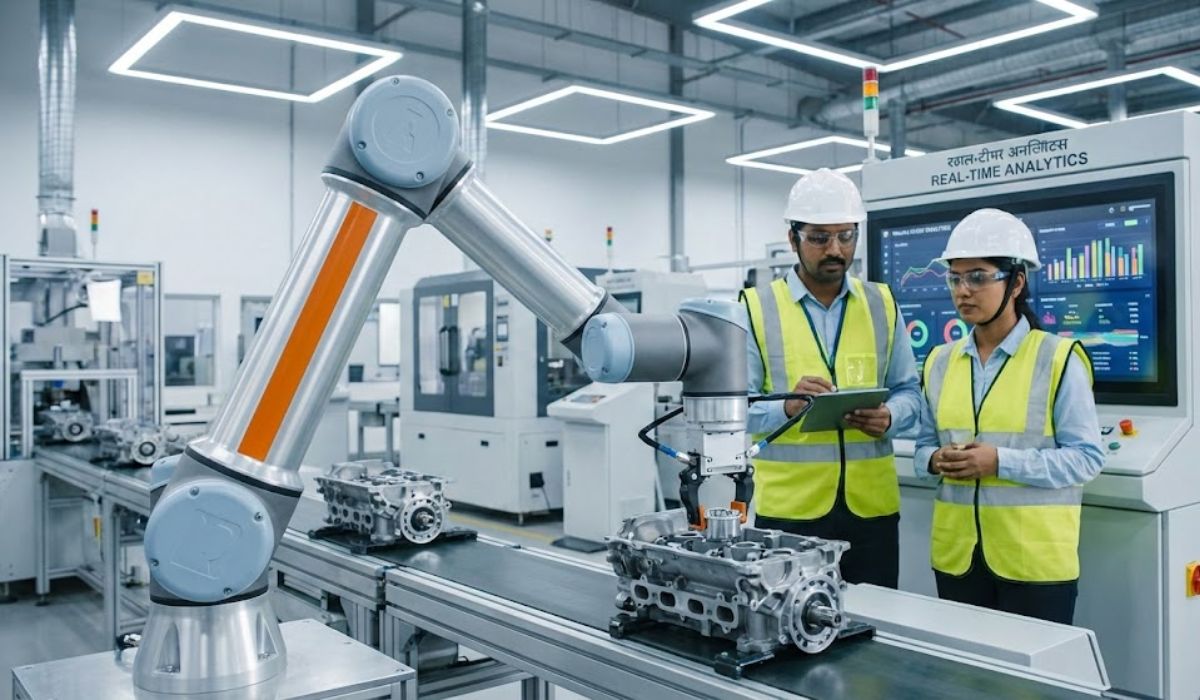
Indian manufacturing stands at a historic inflection point, and the adoption of Robotic Automation Solutions in Manufacturing is the defining response. For decades, the sector’s competitive advantage was predicated on abundant, cost-effective labor. Today, that model is under severe strain. Rising wage expectations, intensifying global competition, inconsistent output quality, mounting workplace safety concerns, and relentless pressure from global supply chains for higher standards and tighter tolerances are converging into a powerful mandate for change. The traditional reliance on manual processes—once the backbone of production—is now a bottleneck to scaling, profitability, and survival.
This paradigm shift is where robotic automation solutions transition from being a speculative “future technology” to an indispensable, present-day operational necessity. Unlike the software automation that streamlines office workflows, robotic automation in manufacturing is profoundly physical. It involves the deployment of intelligent machines on the factory floor—robots that weld with unerring precision, lift massive payloads without fatigue, assemble components with micron-level accuracy, inspect products with eagle-eyed consistency, and handle materials with relentless efficiency.
Indian industries are now embracing these systems not with the simplistic goal of displacing human workers, but with the strategic intent of eliminating the inherent inefficiencies, risks, and variabilities in tasks that humans are poorly suited to perform. The objective is augmentation, not replacement—freeing the human workforce to focus on higher-value activities like supervision, programming, quality oversight, and innovation.
What Robotic Automation Truly Means in a Manufacturing Environment
At its core, robotic automation in manufacturing is the integrated orchestration of multiple hardware and software components into a cohesive, reliable production unit. It encompasses industrial robots, collaborative robots (cobots), precision fixtures, control systems, sensors, and comprehensive safety infrastructure. This ecosystem is designed to automate operations that are repetitive, hazardous, physically demanding, or critically dependent on unwavering accuracy.
This movement is not about chasing buzzwords or prestige. It is a pragmatic, problem-solving engineering discipline aimed at addressing chronic pain points that erode profitability and competitiveness:
-
Irregular Weld Quality: Manual welding is an art, but artistry introduces variation. Robotic welding delivers identical, code-compliant welds every single time.
-
High Rejection Rates: Human fatigue and subjective judgment lead to defects. Automated inspection and precise assembly drastically reduce scrap and rework.
-
Machine Idle Time: CNC machines and presses are capital-intensive assets. Relying on manual loading/unloading means they sit idle during operator breaks, shift changes, or due to simple fatigue.
-
Operator Fatigue and Safety Risks: Tasks involving heavy loads, toxic fumes, repetitive strain, or proximity to dangerous machinery are primary sources of workplace injuries and long-term health issues.
The fundamental principle is this: Automation succeeds when it is process-driven, not trend-driven. The question is never “Should we get a robot?” but rather “Which specific process problem are we solving, and is a robot the most effective solution?”
Why Indian Manufacturers Are Accelerating Automation Adoption
The acceleration of automation adoption across India is not a matter of fashion; it is a strategic imperative for survival and sustainable growth. Several interconnected drivers are fueling this shift:
-
Labor Volatility and Deepening Skill Gaps: The manufacturing sector faces a dual challenge: high attrition rates among trained operators and a growing scarcity of new talent willing to take up shop-floor roles. Constantly recruiting and training new workers is costly and leads to disruptive cycles of low productivity and high defect rates. Robots provide a bedrock of consistency and output that is immune to these human resource fluctuations, ensuring production schedules are met reliably.
-
Intensifying Quality Pressure from Global Supply Chains: Indian manufacturers, especially in automotive, aerospace, electronics, and engineering goods, are integral nodes in global supply chains. OEMs and international customers demand near-perfect quality, traceability, and adherence to strict technical specifications. Manual processes, with their inherent variability, struggle to maintain Six Sigma-level repeatability across shifts, days, and production batches. Automation is the key to achieving and evidencing this consistent quality.
-
The Non-Negotiable Priority of Safety and Compliance: As safety standards tighten and corporate social responsibility takes center stage, mitigating workplace risk is paramount. Automating hazardous operations—such as heavy palletizing, foundry work, painting, or handling sharp materials—directly reduces the potential for serious injury. This not only protects employees but also shields the business from regulatory penalties, insurance premiums, and reputational damage.
-
Long-Term Operational Cost Control and Predictability: While the capital expenditure for automation is significant, the total cost of ownership tells a different story. Automation provides long-term cost stabilization by dramatically reducing expenses related to scrap, rework, warranty claims, and unplanned downtime. It enables better utilization of raw materials and energy, and allows for more accurate production planning. In an era of margin pressure, this predictability is invaluable.
Core Components of a Successful Industrial Robotic Automation System
Implementing Robotic Automation in Manufacturing is not akin to buying a standalone machine. It is about engineering a system. A robot alone is merely an articulate arm; its success hinges on the ecosystem built around it.
-
Industrial Robots and Collaborative Robots (Cobots): The choice between traditional industrial robots (for speed, payload, and reach in isolated workcells) and cobots (for safe interaction alongside humans in flexible, shared spaces) is fundamental. Selection is based on a detailed analysis of payload, reach, accuracy, cycle time, and the required level of human-robot collaboration.
-
End-of-Arm Tooling (EOAT): This is the robot’s “hand.” Whether it’s a custom gripper, welding torch, vacuum cup, or screwdriver, the EOAT is mission-critical. A profound truth in automation is that a mediocre robot with excellent tooling will outperform an excellent robot with poor tooling. Tooling design is where deep process understanding is materialized.
-
Fixtures and Special Purpose Machines (SPMs): Fixtures define and ensure part location accuracy. A robot’s precision is meaningless if the part it’s working on is misaligned. SPMs often complement robots, performing dedicated, complex tasks (like drilling or tapping) within an automated cell, creating a complete work unit.
-
Control Systems and Safety Architecture: Programmable Logic Controllers (PLCs), safety-rated sensors, light curtains, fencing, and emergency stops form the nervous system and protective shield of the automation cell. This layer ensures seamless sequencing, interoperability with other machines, and strict compliance with international safety standards (like ISO 10218).
-
Vision Systems and Sensors: 2D and 3D vision systems grant robots the gift of perception. They are essential for applications involving part location verification, random bin picking, or in-line quality inspection, introducing flexibility to handle natural variations in parts.
High-Impact Use Cases Transforming Indian Factories
Automation delivers the most compelling return on investment when applied to well-defined, high-impact processes. Several use cases are demonstrating transformative results across India:
-
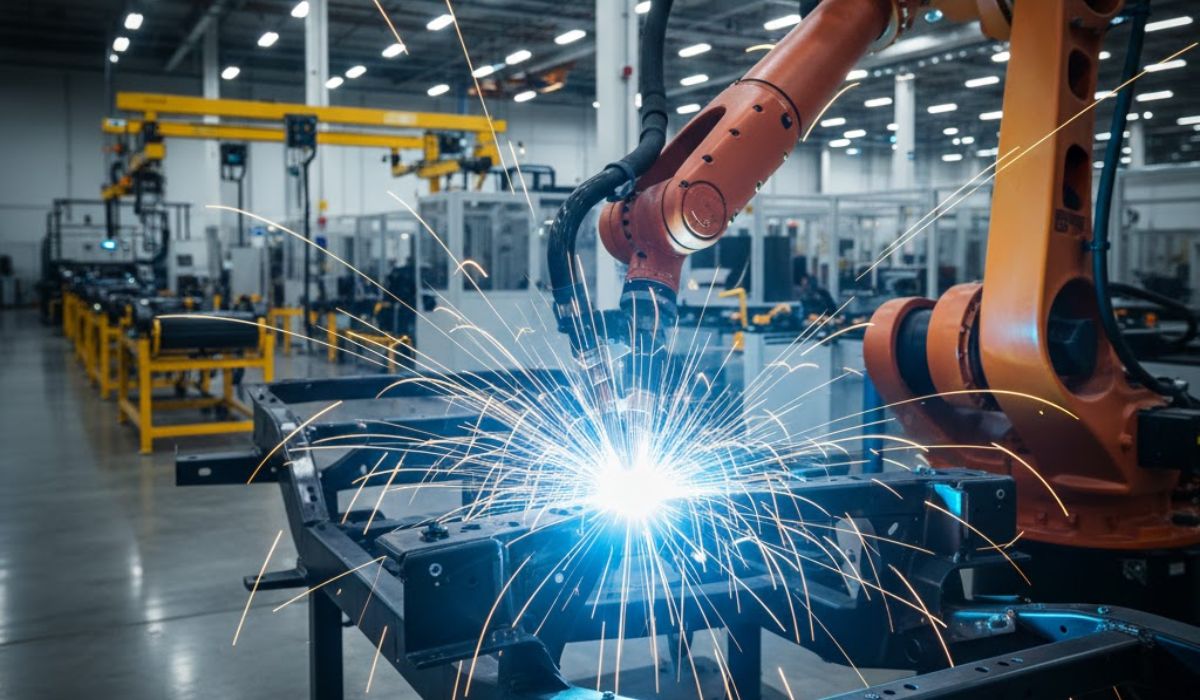
Robotic Welding: A cornerstone application. In automotive component fabrication, structural steel work, and heavy engineering, robotic welding cells ensure perfect weld penetration, seam consistency, and speed. They eliminate the skill dependency of manual welders, reduce gas and wire consumption, and drastically cut down on post-weld rework and grinding.
-
Machine Tending: One of the most common and effective entry points for automation. Robots tirelessly load raw billets into CNC lathes and unload finished parts, 24/7. This maximizes the utilization of expensive capital equipment, enables “lights-out” production for additional shifts, and frees skilled machinists to oversee multiple machines and focus on quality control.
-
Precision Assembly: For sub-assemblies with multiple small parts—such as in electronics, pumps, or automotive interiors—robotic arms provide superhuman consistency. They apply the exact same force, in the exact same sequence, at the exact same angle, cycle after cycle, eliminating assembly-line errors and improving product reliability.
-
Material Handling and Palletizing: From die casting and forging to packaging lines, robots excel at moving heavy, hot, or awkward items. They reduce physical strain on workers, accelerate line speeds, and optimize logistics within the plant by stacking and palletizing with precision, ready for shipment.
The Real Challenges Nobody Likes to Admit: Why Some Automation Projects Fail
The promise of Robotic Automation in Manufacturing is immense, but the path is littered with pitfalls. Success is not guaranteed by the purchase order. Common, often unspoken, challenges include:
-
Poor Process Selection and Understanding: Automating a chaotic, undefined, or broken manual process simply makes problems occur faster and more expensively. The mantra must be “Simplify, Standardize, then Automate.”
-
Inadequate Fixture and Tooling Design: As emphasized, this is the most frequent technical failure point. Insufficient investment in robust, precision fixturing will doom a project to constant adjustment and poor quality output.
-
Vendor-Driven, Price-First Decisions: Selecting a system based solely on the lowest robot purchase price, without evaluating the integrator’s engineering expertise, lifecycle support, and total cost of ownership, leads to systems that are unreliable and unsupportable in the long run.
-
Cultural Resistance and Lack of Workforce Engagement: Treating automation as a threat rather than a tool leads to underutilization. Failing to involve floor supervisors and operators in the design and implementation phase, and neglecting comprehensive training, ensures the system will be met with skepticism and will never achieve its full potential.
Factories that candidly acknowledge these realities during the planning phase and structure their projects to mitigate them achieve dramatically better outcomes and higher returns.
A Strategic Blueprint for Sustainable Automation Adoption
For manufacturers ready to embark on this journey, a disciplined, phased approach is non-negotiable for sustainable success:
-
In-Depth Process Study: Map the current state in detail. Identify the true constraints, quality variables, and cycle times. The robot selection comes after this analysis, not before.
-
Holistic ROI Evaluation: Move beyond simple labor displacement calculations. Model the full financial impact including quality yield improvement, machine utilization gains, material savings, safety cost avoidance, and increased throughput capacity.
-
Parallel Engineering of Fixtures and Tooling: Allocate significant time and engineering resources to designing and prototyping the EOAT and fixtures. This is the foundation of the system.
-
Design for Scalability and Flexibility: The system architecture should allow for future expansion—adding more robots, integrating new processes, or adapting to product changes. Avoid dead-end, “island of automation” solutions.
-
Plan for Lifecycle Management: From day one, have a clear plan for preventive maintenance, spare parts, troubleshooting, and future upgrades. Ensure your team is trained not just to operate, but to understand and maintain the system.
Automation should be a capability that grows and evolves with the factory, not a rigid, one-time purchase that becomes obsolete.
The Future Trajectory of Robotic Automation in Manufacturing in India
The future of Indian manufacturing automation is not about creating dark, people-less factories. It is about building smarter, more responsive, and hybrid production environments. Key trends will shape this future:
-
Proliferation of Cobot Cells: Cobots will bring automation to small and medium enterprises (SMEs) and to intricate assembly tasks on existing production lines, working hand-in-glove with human workers.
-
Advancement of Vision-Guided Robotics: As product mixes become more varied and customized, vision systems will allow single robotic cells to handle multiple product types without mechanical changeovers, supporting the trend towards high-mix, low-volume production.
-
Integrated Robotic SPM Systems: The line between robots and Special Purpose Machines will blur, creating highly optimized, turnkey cells for specific complex processes like engine block machining or transmission assembly.
-
Data-Linked Production Intelligence: Robots will become rich data sources. Information on cycle times, downtimes, quality checks, and maintenance needs will feed into plant-wide Manufacturing Execution Systems (MES), enabling predictive analytics and real-time production optimization.
The future is one of smart, pragmatic automation—robust enough for the demanding Indian shop-floor environment, yet intelligent and flexible enough to drive the next wave of productivity and quality.
Final Reality Check: Purpose of Robotic Automation in Manufacturing
It is vital to conclude with a foundational truth: Robotic automation in manufacturing, at its best, is not primarily about replacing people. Its higher purpose is to systematically remove the elements that degrade manufacturing excellence: inconsistency, waste, operational risk, and ergonomic harm. It is about elevating the role of the human worker from being a source of variable physical labor to being a skilled overseer, optimizer, and innovator.
Indian factories that approach automation with this mindset—grounded in engineering discipline, strategic clarity, and respect for their workforce—are the ones poised to lead the next phase of the nation’s industrial growth. They will set new benchmarks in quality, become suppliers of choice in global chains, and build more resilient, profitable enterprises. Conversely, those who delay, viewing automation as a distant concern, will find themselves trapped in a cycle of rising costs and diminishing competitiveness. The breaking point has arrived, and the path forward is clear: move intelligently from manual to smart automation, or risk being left behind.