
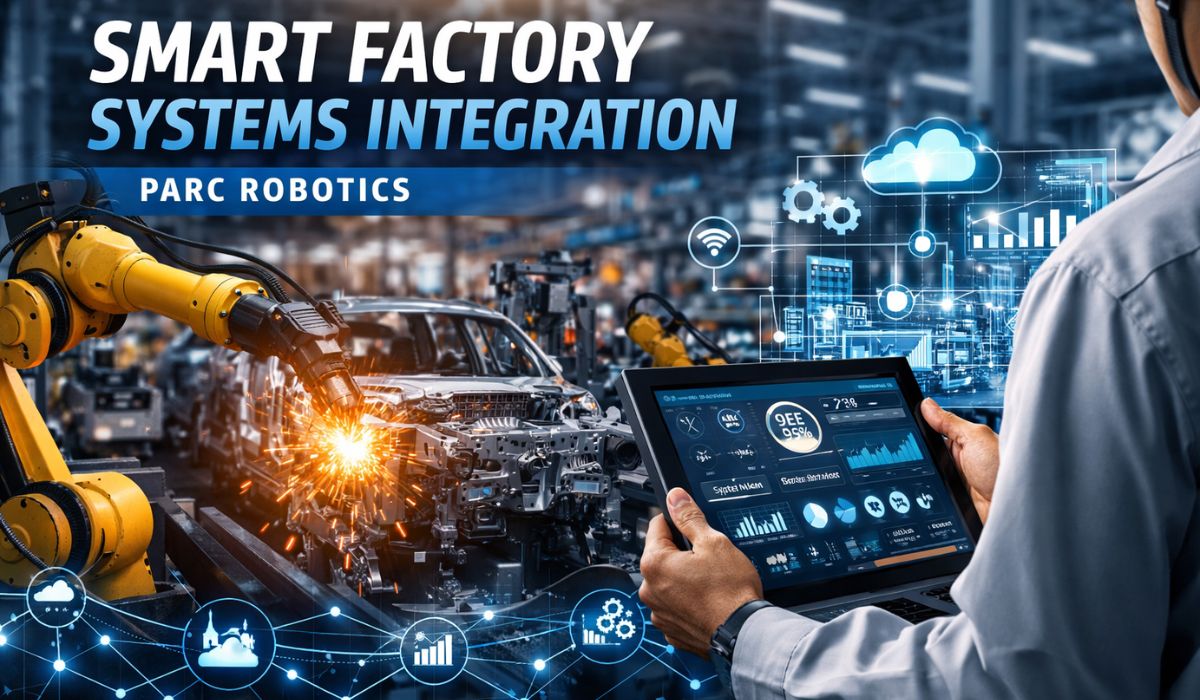
Engineering Smart Factory Systems for High-Performance Manufacturing
Manufacturing competitiveness today depends on speed, precision, and real-time control. Smart factory systems integrate robotics, automation controls, industrial communication networks, and production data into a connected ecosystem that improves operational visibility and measurable performance.
Parc Robotics delivers engineered smart factory system integration for automotive, heavy engineering, and industrial manufacturing environments where robotic automation and precision process control are critical.
What Is a Smart Factory System?
A smart factory system is an integrated production environment where:
-
Robotic automation executes repeatable, high-precision tasks
-
PLC and SCADA systems control and monitor operations
-
Industrial networks connect machines and production cells
-
IIoT-enabled devices collect real-time process data
-
Centralized dashboards provide production visibility
The framework aligns with principles of Industry 4.0 and leverages structured connectivity similar to Industrial Internet of Things environments.
The objective is measurable improvement — higher OEE, lower downtime, controlled quality, and scalable production capacity.
Our Smart Factory Integration Capabilities
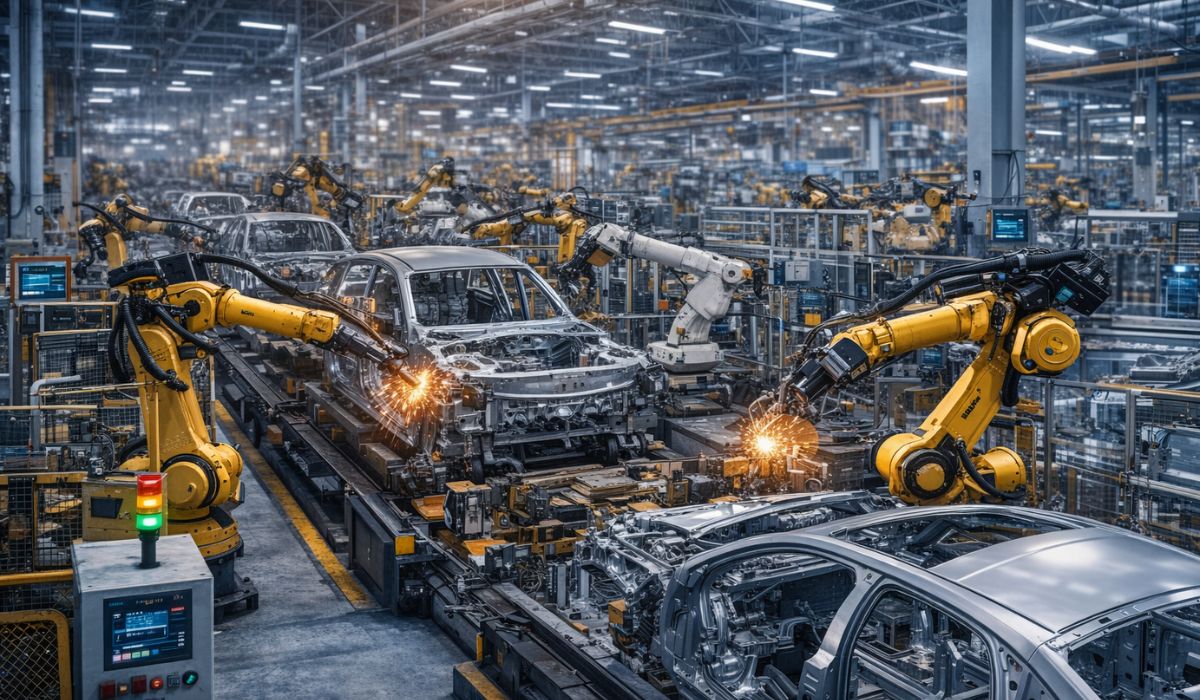
1. Robotic Automation Systems
-
Robotic welding cells
-
Material handling robotics
-
Assembly automation solutions
-
Vision-assisted robotic systems
2. Control & Electrical Integration
-
PLC programming and commissioning
-
Control panel design and integration
-
SCADA configuration
-
Industrial network setup
3. Connected Production Architecture
-
Machine-to-machine communication
-
Real-time production data collection
-
Sensor integration
-
Condition monitoring frameworks
4. Data Visibility & Process Monitoring
-
OEE tracking systems
-
Downtime analysis dashboards
-
Production traceability integration
-
Quality monitoring workflows
Smart Factory System Architecture
A structured smart factory environment operates across four layers:
1. Machine Layer – Robots, fixtures, conveyors, weld guns, tooling.
2. Control Layer – PLC systems, drives, control panels.
3. Communication Layer – Industrial Ethernet, real-time protocols.
4. Data & Monitoring Layer – Dashboards, analytics, performance tracking.
Effective integration across these layers ensures production stability and long-term scalability.
Industries We Serve
-
Automotive OEMs
-
Tier-1 & Tier-2 automotive suppliers
-
Body-in-White manufacturing
-
Heavy engineering units
-
Industrial fabrication plants
Our focus remains on production-critical automation environments.
Implementation Methodology
Smart factory transformation requires structured engineering. Our execution model includes:
-
Production audit and automation gap analysis
-
System architecture design and feasibility validation
-
Robotics and control integration planning
-
Installation and commissioning
-
Validation, testing, and operator training
-
Performance monitoring and optimization
Each deployment is engineered around takt time, throughput stability, and long-term maintainability.
Measurable Operational Outcomes
Depending on plant configuration and integration depth, smart factory systems typically enable:
-
Cycle time reduction
-
Improved production consistency
-
Enhanced OEE visibility
-
Reduced manual intervention
-
Better quality control monitoring
-
Controlled downtime analysis
Actual improvements depend on baseline plant conditions and scope of implementation.
Why Integration Expertise Matters
Automation alone does not create a smart factory. Isolated robots or standalone machines create operational silos.
True smart factory systems require coordinated integration between:
-
Robotic platforms
-
Control systems
-
Industrial communication networks
-
Production monitoring frameworks
Structured system integration ensures operational continuity and predictable performance.
Smart Factory Systems for Indian Manufacturing
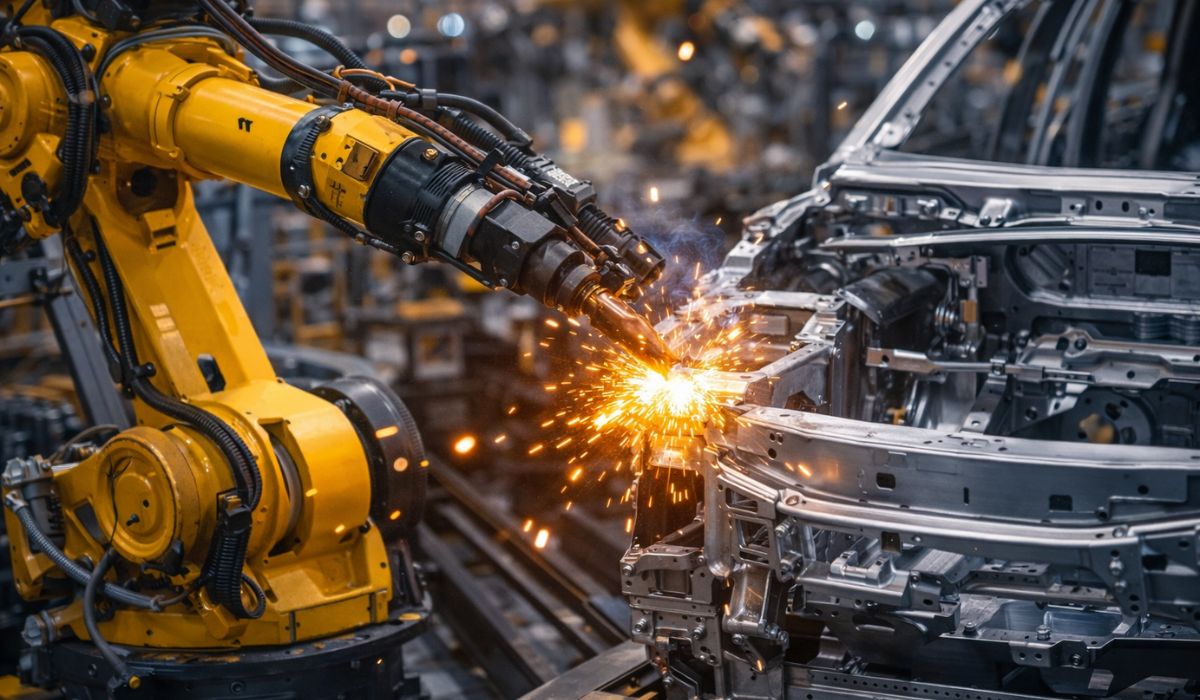
Indian manufacturing is rapidly transitioning toward connected production environments. Competitive pressures, export standards, and productivity benchmarks demand structured automation integration.
Smart factory systems allow manufacturers to scale output while maintaining process control, data visibility, and quality compliance.
Parc Robotics supports this transition through engineered automation integration tailored to production-critical industries.
Discuss Your Automation Requirements
If you are evaluating smart factory system implementation or upgrading an existing production line, technical consultation can help assess feasibility, integration scope, and expected performance outcomes.
Contact Parc Robotics to initiate a structured assessment of your manufacturing automation requirements.
Frequently Asked Questions (FAQs)
Q.1 What is the difference between factory automation and smart factory systems?
Factory automation focuses on automating individual machines or processes.
Smart factory systems integrate robotics, control systems, communication networks, and production data into a connected ecosystem.
Automation improves execution.
Smart factory systems improve visibility, control, and decision-making across the entire production line.
Q.2 Can smart factory systems be implemented in an existing plant?
Yes, smart factory systems can be implemented in brownfield facilities.
Implementation usually involves:
-
Upgrading control systems
-
Integrating industrial communication networks
-
Connecting machines to centralized monitoring platforms
-
Deploying robotic automation where feasible
Phased deployment is often recommended to minimize production disruption.
Q.3 What measurable improvements can a smart factory system deliver?
Impact depends on plant maturity and scope of integration, but typical improvement areas include:
-
Improved cycle time stability
-
Enhanced OEE visibility
-
Reduced manual intervention
-
Better downtime categorization
-
Improved process consistency
Actual performance gains require structured integration and process alignment.
Q.4 How long does smart factory system implementation take?
Timeline depends on:
-
Production line complexity
-
Number of robotic cells
-
Control system upgrades required
-
Communication infrastructure scope
Small cell-level integration may take weeks.
Full line-level smart factory deployment can take several months including testing and stabilization.
Q.5 What industries benefit most from smart factory systems?
Smart factory systems deliver maximum value in:
-
Automotive OEM production lines
-
Body-in-White manufacturing
-
Heavy engineering plants
-
Industrial fabrication environments
-
High-volume precision manufacturing units
Industries with repeatable processes and tight quality tolerances benefit the most.
Q.6 Is smart factory implementation expensive?
Cost varies based on:
-
Automation depth
-
Robotics scope
-
Control system upgrades
-
Monitoring infrastructure
While upfront investment can be significant, ROI is typically driven by productivity improvement, quality consistency, and reduced operational inefficiencies.
A feasibility assessment is required to estimate implementation scale accurately.