
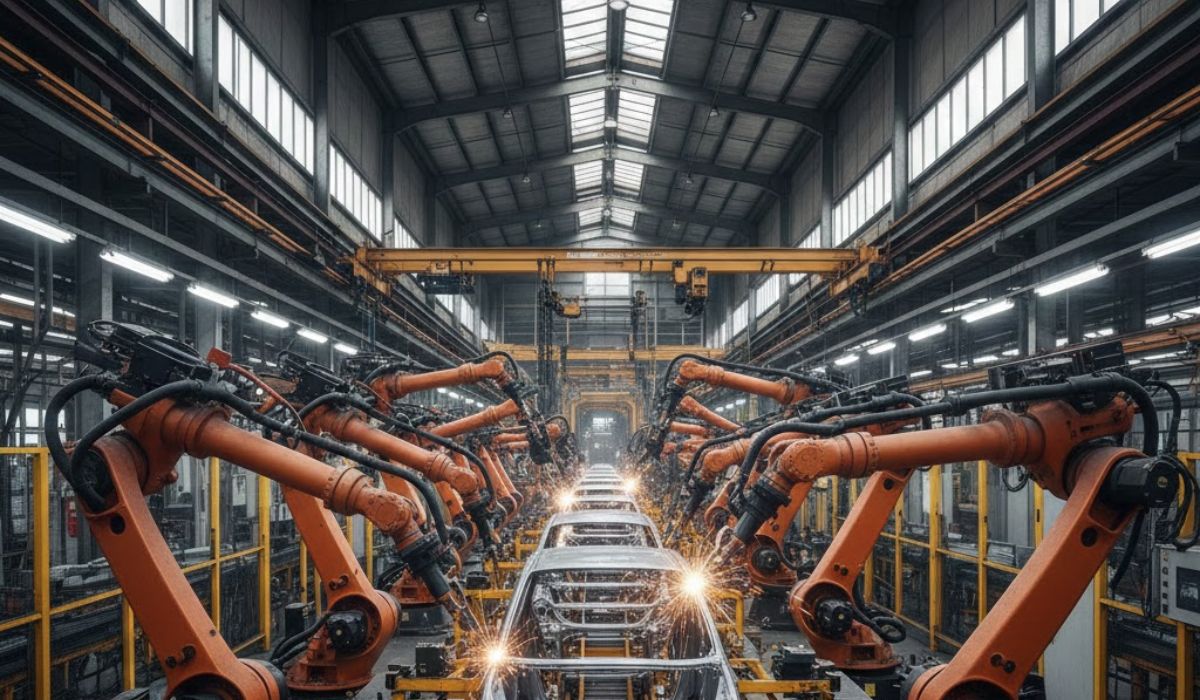
Industrial automation is often misunderstood as a hardware problem. In many factories, automation discussions begin with robot brands, axis speed, payload capacity, and reach. The assumption is simple: if the robot is powerful and precise enough, the automation project will succeed.
This assumption is wrong.
Robots are tools, not solutions. When robotic automation fails on the shop floor—through unstable quality, missed cycle times, or frequent downtime—the robot is rarely the root cause. The real problem lies in incomplete system engineering. Automation is not about installing a robot; it is about designing a production system that can survive real manufacturing conditions.
This article explains why robots alone cannot fix automation problems, where most projects break down, and why production managers must think beyond robot selection if they want reliable results.
Precision Robots Versus Manufacturing Reality
Industrial robots are designed for repeatability. They execute programmed motions with extreme precision, repeating the same path thousands of times without deviation. Manufacturing environments, however, are rarely that consistent.
Upstream processes introduce variation in subtle but impactful ways. Tool wear, welding distortion, material inconsistency, manual handling, and thermal effects all contribute to dimensional variation. In manual operations, experienced operators instinctively compensate for these variations. Robots do not.
In one high-volume robotic welding application, a modern six-axis robot was installed with accurate programming and validated paths. On paper, the system was correct. On the shop floor, weld quality fluctuated and rework increased. Initial troubleshooting focused on robot path correction, torch angles, and programming refinements. None of these solved the problem.
The root cause was upstream variation combined with weak part location. Parts were not being presented to the robot consistently. The fixture did not establish a stable datum, and the robot’s precision was effectively wasted. The robot was welding accurately, but not in the correct position relative to the part.
The real solution was not better robot programming. It was proper fixture design that mechanically absorbed variation and ensured repeatable part positioning. Until the part location was stabilized, the robot’s accuracy had no value.
This situation is common across automation projects. Robots expose manufacturing variation rather than correcting it. If variation is not engineered out mechanically, robots will amplify problems instead of solving them.
Fixture Design Is the Foundation of Automation
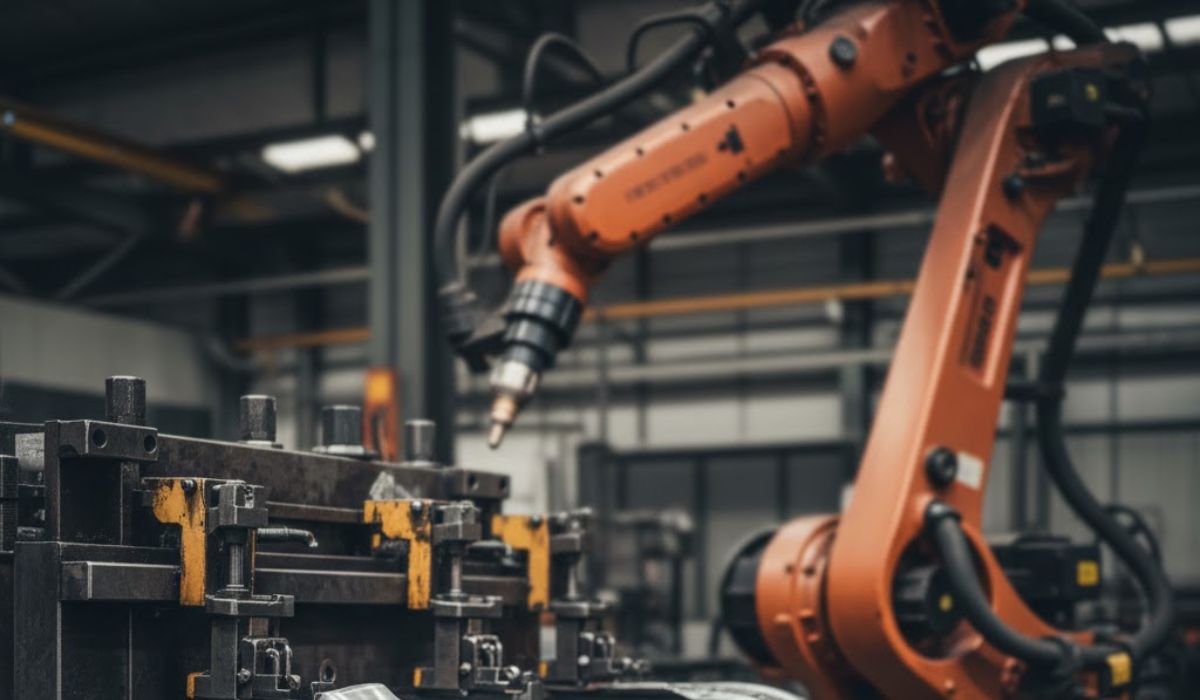
Fixtures are often treated as secondary elements in automation projects. The main attention goes to the robot, PLC, sensors, and vision systems. Fixtures are rushed, simplified, or finalized late in the project lifecycle.
This approach leads to unstable automation.
Fixtures control how a part is located, constrained, and presented to the robot. They define repeatability, influence cycle time, and determine how much compensation logic the robot must use. When fixture design is weak, automation teams attempt to compensate through software—using vision offsets, additional sensors, or complex logic.
These compensations increase complexity and reduce reliability. Systems become sensitive to minor changes, difficult to troubleshoot, and heavily dependent on skilled personnel. Over time, uptime suffers.
Well-engineered fixtures simplify automation rather than complicating it. They establish clear datums, mechanically absorb part variation, and reduce the need for software-based correction. Robot programs become simpler, quality becomes predictable, and maintenance becomes manageable.
In practice, fixture quality often determines whether automation is robust or fragile. A robot cannot compensate for poor mechanical fundamentals. If the fixture is unstable, the automation system will always struggle.
Why Robot Speed Does Not Define Production Speed
One of the most common reasons automation projects disappoint production teams is unrealistic cycle time expectations. Robot specifications highlight impressive speeds and acceleration, creating the impression that throughput will automatically improve.
Production output, however, is governed by the entire system, not the robot arm alone.
In a pick-and-place application, a robot was selected based on its maximum speed and payload capability. On paper, the cycle time target was achievable. During actual production, output was nearly 40 percent slower than promised. The robot spent significant time waiting rather than moving.
The delays originated from gripper actuation time, the complexity of handling a flexible part, confirmation delays from the vision system, and communication latency between the PLC and robot controller. Additional safety logic added during commissioning further reduced throughput.
The robot was not the bottleneck. The system was.
In automation, the slowest element determines the overall cycle time. This could be the gripper, vision system, sensor response, safety interlocks, or operator interaction. Ignoring these factors during the design phase leads to unrealistic promises and production disappointment.
For production managers, it is critical to evaluate automation as a complete system rather than focusing on robot speed alone.
Robots Do Not Adapt to Human Behavior
Manual production systems rely heavily on human adaptability. Operators adjust their handling, compensate for minor defects, and make real-time decisions to keep production moving. These adjustments are rarely documented, but they are essential to line stability.
Robots do not adapt. They execute predefined logic exactly as programmed.
Many automation systems are designed under ideal assumptions: consistent part loading, disciplined operator behavior, uniform part condition, and minimal drift over time. Real manufacturing environments rarely meet these assumptions. Operators change shifts, shortcuts develop under production pressure, and part conditions vary slightly across batches.
If automation design does not account for this reality, systems become fragile. Small deviations lead to faults, stoppages, and frequent manual intervention. Under high production pressure, these weaknesses become increasingly visible.
Robust automation accounts for real human behavior. It includes foolproofing, clear part orientation enforcement, error detection, and recovery logic. Systems that ignore operator behavior inevitably struggle once they move beyond controlled trial conditions.
Software Cannot Compensate for Weak Mechanical Design
When automation systems struggle, there is often a temptation to fix problems through software. Vision-based corrections, dynamic offsets, complex PLC logic, and frequent recalibration are introduced to handle variation.
While these tools have their place, they should not be used to compensate for weak mechanical design. Over-reliance on software increases system complexity and troubleshooting time. It also creates dependency on specialized skills, reducing long-term sustainability.
Strong automation systems are mechanically stable first. Software intelligence enhances performance, but it does not replace mechanical fundamentals. When variation is controlled mechanically, software becomes simpler and more reliable.
Production managers should be cautious of solutions that rely heavily on software compensation to mask mechanical issues. These systems often perform well during demonstrations but struggle during long-term production.
The Difference Between Buying Robots and Engineering Automation
A critical distinction in automation projects is the difference between robot sellers and system integrators.
Robot sellers focus on hardware specifications—payload, reach, speed, and brand reputation. Their responsibility typically ends with delivering and commissioning the robot. Process stability, fixture quality, and long-term reliability fall outside their scope.
System integrators take responsibility for the entire production system. This includes understanding the manufacturing process, designing fixtures and tooling, managing variation, integrating safety systems, and validating performance under real production conditions.
This difference has a direct impact on automation success. Projects driven by hardware selection often struggle during production. Projects driven by system engineering are far more likely to deliver stable, repeatable output.
Companies like Parc Robotics operate with this system-level mindset, where the robot is treated as one component within a carefully engineered automation solution.
Automation Exposes Process Weaknesses
One uncomfortable truth about automation is that it exposes weaknesses that manual processes hide. Skilled operators compensate for variation instinctively, often without realizing it. When a robot replaces that operator, those compensations disappear.
As a result, automation projects often reveal upstream issues that were previously tolerated. Poor process control, inconsistent part quality, and unclear datum strategies become immediately visible. This can create the perception that automation caused the problem, when in fact it simply revealed it.
Successful automation projects address these weaknesses directly rather than attempting to work around them. This requires collaboration between production, quality, and engineering teams, as well as a willingness to correct upstream processes.
What Production Managers Should Evaluate Before Approving Automation
For production managers, the key to successful automation lies in asking the right questions early. These questions should focus on system behavior rather than robot specifications.
Understanding how part variation will be handled, how fixtures establish stable datums, and which component defines the real cycle time is far more important than choosing a robot brand. Evaluating how the system will behave under worst-case conditions, operator variability, and long-term wear is critical.
Automation projects that address these questions upfront are far more likely to deliver predictable performance.
The Core Reality of Industrial Automation
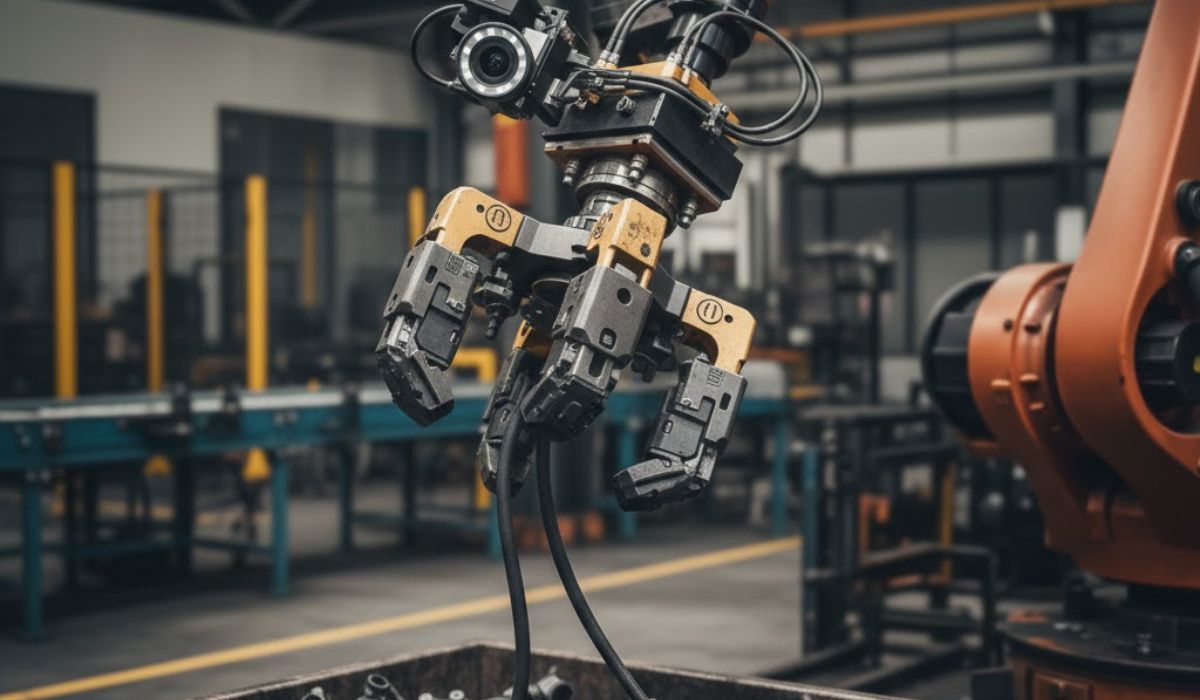
Automation projects do not fail because robots are incapable. They fail because system thinking is incomplete. Robots are unforgiving tools that execute exactly what they are programmed to do. They do not compensate for poor process control, weak fixtures, or unrealistic assumptions.
When automation is engineered as a complete system—respecting variation, prioritizing mechanical stability, and accounting for real factory behavior—robots deliver exceptional value. When these factors are ignored, robots become expensive sources of frustration.
For production managers, the conclusion is clear. Buying a robot is easy. Building reliable automation is an engineering discipline. The success of automation depends far more on system integration than on the robot itself.
FAQs
1. Why do robotic automation projects fail even with advanced robots?
Robotic automation projects usually fail because the system around the robot is poorly engineered. Issues like weak fixture design, uncontrolled part variation, unrealistic cycle time assumptions, and inadequate integration planning cause failures—not the robot itself.
2. Is buying a high-speed robot enough to improve production output?
No. Production output is defined by the slowest element in the automation system. Grippers, fixtures, vision systems, safety logic, and material flow often limit cycle time more than robot speed.
3. Why is fixture design critical in robotic automation?
Fixture design controls part positioning, repeatability, and variation absorption. Without a stable mechanical foundation, robots cannot deliver consistent quality, regardless of programming accuracy.
4. What is the difference between a robot supplier and a system integrator?
A robot supplier provides hardware. A system integrator engineers the complete automation solution, including process understanding, fixture design, system logic, safety integration, and real-world production validation.
5. Can software and vision systems compensate for poor mechanical design?
Software and vision systems can assist automation, but they cannot replace strong mechanical design. Over-reliance on software to fix mechanical issues increases complexity and reduces long-term reliability.
6. How should production managers evaluate a robotic automation project?
Production managers should evaluate how part variation is handled, whether fixture design is finalized early, what defines real cycle time, and how the system behaves under real factory conditions—not just robot specifications.