
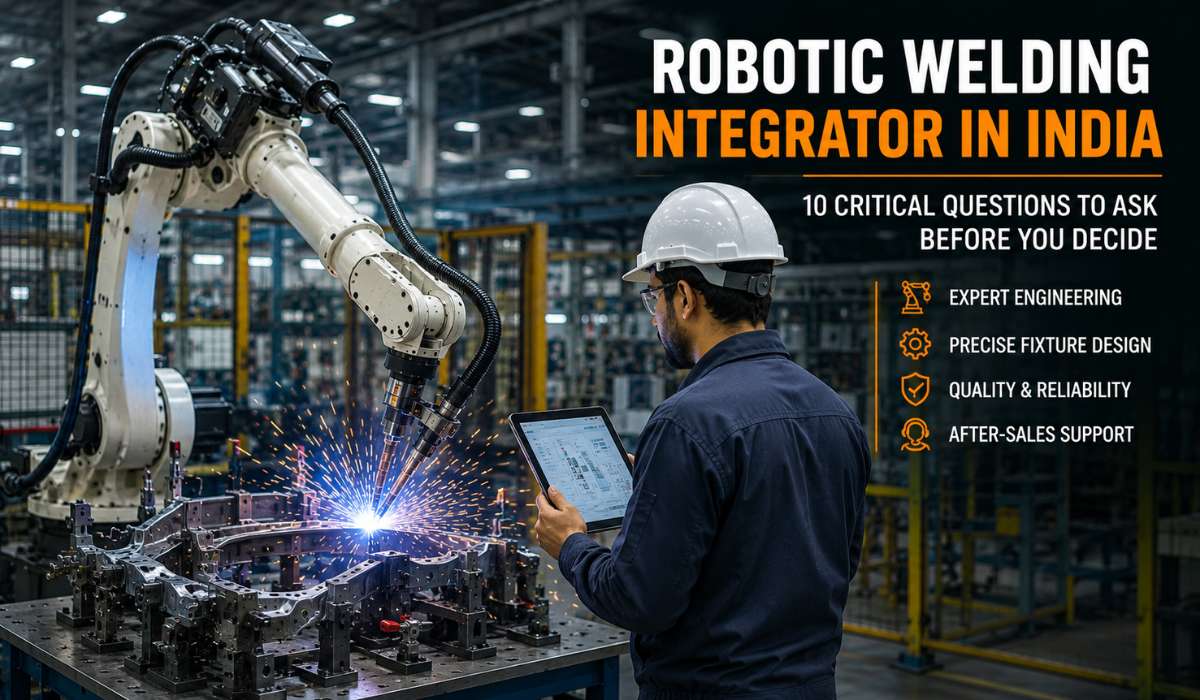
The robot is not the risk. The integrator is. Most robotic welding projects that fail in India fail not because the technology didn’t work — but because the company that designed and commissioned the system didn’t have the depth to do it properly.
Why This Decision Is More Important Than Which Robot You Buy
When Indian manufacturers start evaluating robotic welding, most of the attention goes to the robot brand — FANUC vs ABB vs Yaskawa vs KUKA. That comparison matters, but it is secondary. The robot is a component. The integrator is the engineer, project manager, fixture designer, commissioning team, and long-term support partner all in one.
Choosing the right robotic welding integrator in India is often more important than choosing the robot brand itself. A well-planned integration project can improve weld quality, productivity, uptime, and long-term reliability. Manufacturers that evaluate integrators carefully before investing are more likely to achieve successful automation outcomes and faster return on investment.
A well-integrated robotic welding system running a mid-tier robot will consistently outperform a poorly integrated system built around a premium robot. The robot follows instructions. If the instructions — the program, the fixture, the process setup — are wrong, the robot executes wrongness at high speed and high repeatability.
For manufacturers evaluating automation investments, understanding the differences between robotic welding and manual welding can help clarify long-term productivity, weld consistency, labor dependency, and overall manufacturing efficiency. The comparison becomes especially important when calculating the long-term return on automation investments.
In India’s current automation market, the range of integrator quality is wide. At one end are companies with genuine mechanical and electrical engineering depth, in-house fixture design, and a track record of OEM-supply projects. At the other end are resellers who buy a robot, write a basic program, and call themselves integrators. Both will give you a quote. The quote will look similar. The outcome will not be.
This checklist helps you tell them apart before you commit — not after.
The 10-Point Checklist
1. Do They Design Fixtures In-House?
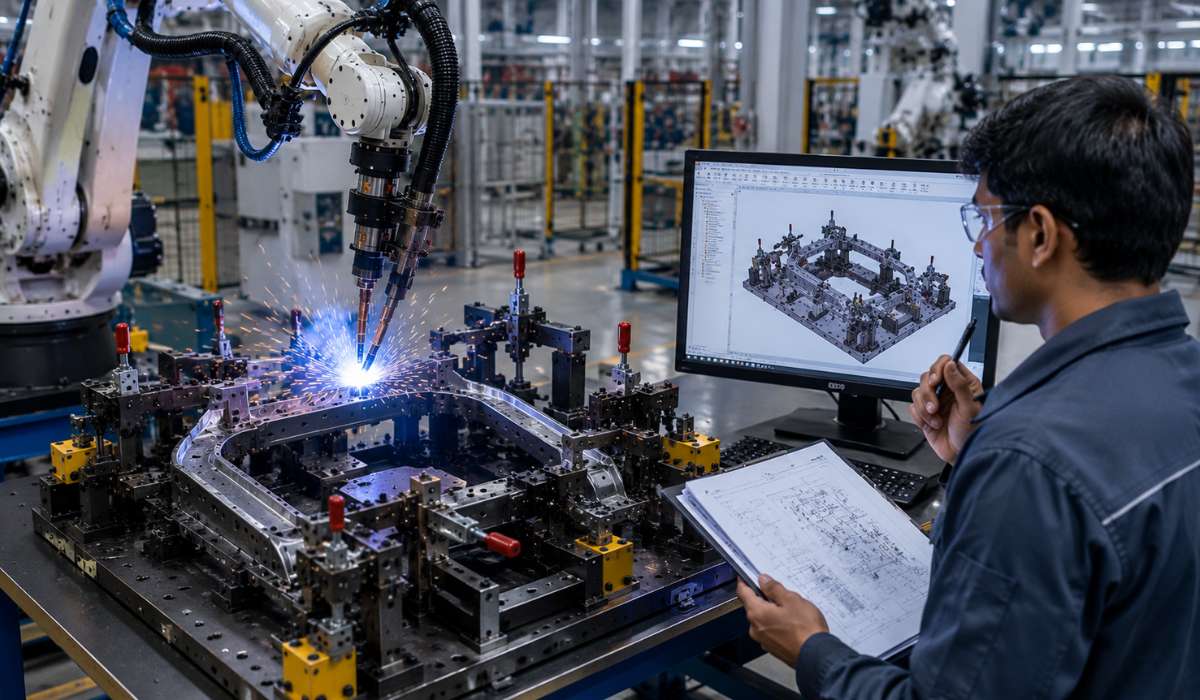
This is the single most important question. The fixture — the mechanical system that holds your part in position during welding — determines whether the robot can achieve the dimensional accuracy your part requires. Fixture design requires mechanical engineering competence, knowledge of thermal expansion during welding, and experience with your specific part geometry.
Many Indian automation vendors outsource fixture design to a third party or simply adapt a generic design. When something goes wrong — and something always needs adjustment during commissioning — a vendor who didn’t design the fixture cannot diagnose or fix it efficiently. Their response will be to call the fixture sub-vendor, who may or may not be cooperative.
Ask directly: who in your team designs the fixture? What is their background? Can I see examples of fixtures your team has designed for similar applications? If the answer is vague, treat it as a red flag.
2. Can They Show You a Running Cell for a Similar Application?
References are standard. Running references are better. Ask the integrator if they can arrange a visit to an existing client’s plant where a cell similar to your application is running in production — not in demonstration mode.
A cell in production has been through the real commissioning process, including all the problems that emerged and were solved. Talk to the production manager at that plant, not just the machine vendor’s salesperson. Ask: what went wrong during commissioning? How long did it actually take vs. what was promised? How responsive has the vendor been for post-installation issues?
An integrator who cannot arrange a single such reference visit should raise serious questions.
3. What Is Their Process for Welding Parameter Development?
Robotic welding is not just path programming. For each joint in your assembly, the integrator must determine the correct wire feed rate, arc voltage, travel speed, torch angle, shielding gas composition, and weld sequence to achieve the specified penetration, bead geometry, and mechanical properties.
Ask the vendor: who in your team develops welding parameters? Do you have a certified welding engineer on staff? Manufacturers can also review welding quality standards published by the American Welding Society (AWS) to better understand qualification and inspection requirements. Do you run weld sample coupons and cross-section them before finalizing parameters? Do you validate weld quality against the drawing specification before commissioning begins at our plant?
In some manufacturing applications, companies also evaluate Special Purpose Machines (SPMs) alongside robotic welding cells. The right choice depends on production volume, part complexity, flexibility requirements, quality expectations, and future scalability. An experienced automation partner should be able to explain the advantages and limitations of both approaches before recommending a solution.
An integrator who treats welding parameters as an afterthought — ‘we’ll sort it out during commissioning’ — will sort it out on your time and your floor space.
4. Do They Have Electrical and Controls Engineering In-House?
A modern robotic welding cell involves PLC programming for safety interlocks, HMI design for operator interface, integration with upstream and downstream conveyors or transfer systems, and often data logging for traceability. These require electrical and controls engineering — a different discipline from mechanical design.
Vendors who subcontract controls work face the same accountability problem as those who subcontract fixtures. When the interlock sequence has a bug, or the HMI throws an error, or the data logging stops working, you need one point of contact who owns all of it. If your vendor says ‘the controls are done by our partner company’, ask who you call at 11 PM when the cell goes down before a Monday morning OEM delivery.
5. What Are Their Commissioning Terms — And What Does Acceptance Mean?
Commissioning is where most project failures become visible. An integrator can promise almost anything in a proposal. Commissioning terms define what they are contractually obligated to deliver.
Review these specific points in any contract:
- Cycle time guarantee — must be validated under production conditions, not demonstration speed with a single test part
- First article inspection — who performs it, what dimensions are checked, what is the pass criteria
- Rejection rate target — some integrators specify process capability (Cpk) as a commissioning acceptance criterion. If this is not in the contract, add it.
- Number of commissioning days included — and what happens if more days are needed
- Definition of ‘acceptance’ — vague language like ‘system performs to satisfaction’ is a dispute waiting to happen
If the vendor resists specific commissioning acceptance criteria, that tells you something about how confident they are in their own delivery.
6. What Is Their Warranty and Breakdown Response Commitment?
A robotic welding cell going down during production is not an inconvenience — it is a production stoppage. For a plant supplying to an OEM on a just-in-time schedule, even four hours of unplanned downtime can cascade into a line stoppage at the customer.
Ask for specific numbers: What is the response time if the cell goes down? On-site response within how many hours? What spare parts do they keep in stock? Do they offer a formal Annual Maintenance Contract (AMC) with committed response times? Is remote access diagnostics available?
Be wary of vendors who give reassuring but non-specific answers — ‘we are always available’, ‘our team will be there quickly’. Get specific hours in writing.
7. Have They Worked in Your Industry and Application Type?
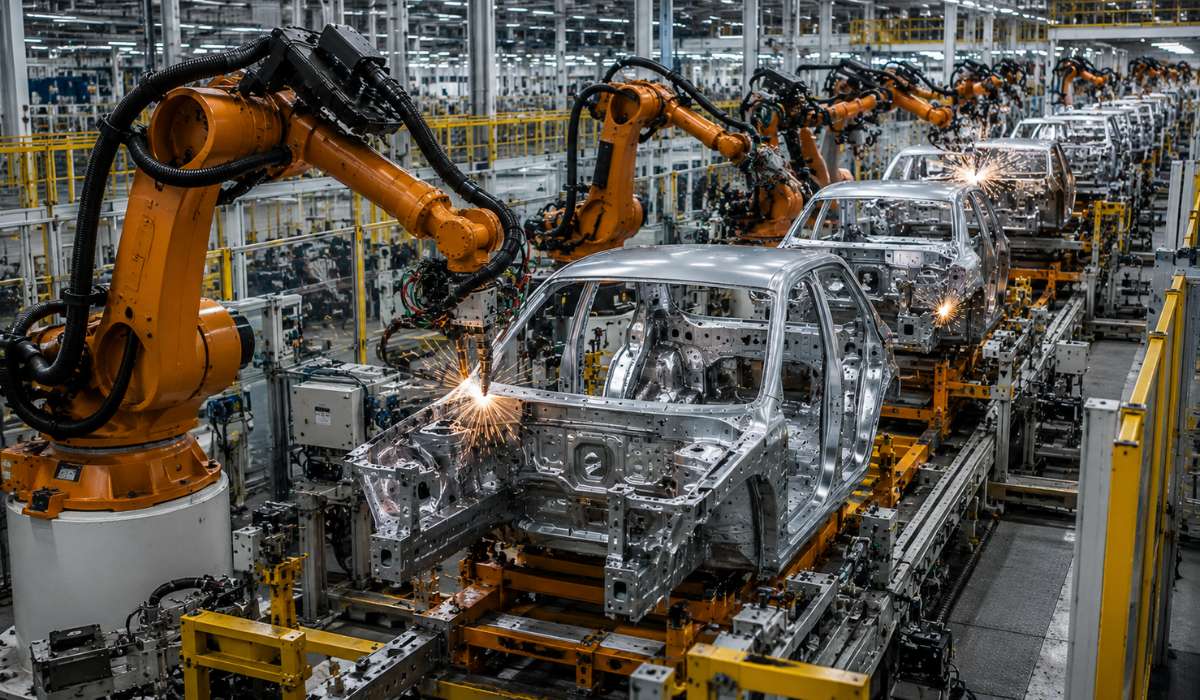
Robotic welding for a two-wheeler frame is different from robotic welding for a diesel engine manifold, which is different again from a seat frame assembly line. The part geometry, material, weld type, fixture design philosophy, and quality requirements differ significantly across applications.
Similar considerations apply when evaluating SPM vs Standard Machine solutions. Different manufacturing environments require different levels of flexibility, automation, and production output. An integrator with application-specific experience can recommend the most practical solution based on actual production requirements rather than a one-size-fits-all approach.
An integrator who has built five cells for the same general application type has solved the common problems already. Their first cell probably had issues. Their fifth is reliably good. You want to be their fifth, not their first.
Ask for specific application experience: have you built a cell for this type of component? What were the key challenges? Show me the solution. Generic claims of ’10 years of experience in automation’ do not answer this question.
Reviewing real-world project examples can provide additional confidence when evaluating an integrator’s capabilities. For example, automotive applications such as Toyota component spot welding and robotic weld lines demonstrate the level of engineering, fixture design, process validation, and commissioning expertise required for high-volume manufacturing environments.
8. How Do They Handle Part Variation and Fixture Wear?
In production, incoming parts are never perfectly consistent. Sheet metal parts have forming variation. Castings have dimensional spread. Even small variation in part position, if the fixture doesn’t account for it, causes the robot to weld in the wrong location.
Ask how the integrator handles this: do they build tolerance into the fixture locators? Do they use vision-guided welding for applications where part variation is significant? How does the system respond when a part is loaded slightly out of position — does it alarm and stop, or does it weld a defect?
Similarly, fixtures wear over time. Locating pins wear. Clamps lose clamping force.
A proper commissioning process should also include automated weld quality inspection and verification procedures. Consistent quality monitoring helps identify process variation early, reduce defect rates, and maintain welding standards throughout the life of the system. This becomes particularly important in high-volume manufacturing environments where even small deviations can impact overall product quality.
Ask how the vendor designs for maintainability: are wear components replaceable without specialized tools? Are replacement parts stocked?
9. What Happens After Installation — Training and Documentation
The integrator will eventually leave your plant. At that point, your production team and maintenance team own the cell. If they cannot operate it, adjust programs, troubleshoot common faults, or perform basic maintenance — you are permanently dependent on the vendor for every issue.
Ask for specific deliverables: what operator training is included? What maintenance training? Is the robot program documented with comments so your team can understand the logic? Is there a maintenance manual specific to your cell — not just the generic robot manual? What is included in the documentation package at handover?
A vendor who delivers a working cell but no usable documentation has made themselves permanently necessary. That is a commercial interest, not a support commitment.
10. Is Their Commercial Structure Aligned With Project Success?
Finally, look at how the vendor structures payment. A vendor who takes 90% payment before installation has little financial incentive to resolve post-commissioning issues quickly. A vendor who ties 20-30% of payment to commissioning sign-off — after you have confirmed the system meets specifications — has skin in the game.
Similarly, ask whether the price includes all known costs: civil work preparation, utilities infrastructure, consumables for commissioning, and spare parts for the first year. Projects that go over budget usually do so because the initial quote excluded items that were always going to be needed.
Manufacturers should also understand the complete robotic welding system cost in India before comparing proposals from different vendors. The total investment often includes robot hardware, fixture design, safety systems, welding equipment, controls integration, commissioning, operator training, and ongoing maintenance support. Evaluating only the initial purchase price can result in inaccurate ROI calculations and unexpected project costs later.
Summary — Evaluation Table
| Evaluation Point | Green Flag | Red Flag |
|---|---|---|
| Fixture design | Full in-house mechanical team, portfolio to show | Outsourced or vague answer about who designs |
| Running reference | Can arrange plant visit, client speaks freely | References available but visits not offered |
| Welding process depth | Certified welder on team, coupon testing done | ‘We’ll sort parameters during commissioning’ |
| Electrical / controls | Full in-house, single point of contact | Controls subcontracted to partner company |
| Commissioning terms | Specific: cycle time, Cpk, exact acceptance criteria | Vague: ‘performs to satisfaction’, no metrics |
| Breakdown support | AMC with specific response hours, spare parts stocked | ‘We are always available’ — no SLA in writing |
| Industry experience | 5+ cells in your application type, specific examples | Generic automation experience claimed |
| Part variation handling | Tolerance in fixture design, weld position logic | No clear answer, ‘robot is accurate enough’ |
| Post-install support | Training plan, documented program, maintenance manual | Cell handover with only OEM manuals |
| Payment structure | 20–30% tied to commissioning sign-off | 90%+ payment before installation complete |
Frequently Asked Questions
How do I choose a robotic welding integrator in India?
The best robotic welding integrators combine fixture design expertise, welding process knowledge, controls engineering, and commissioning support. Manufacturers should evaluate technical capability, industry experience, references, and post-installation service before making a decision.
Why is fixture design important in robotic welding?
Fixture design directly affects weld accuracy, repeatability, and dimensional consistency. Even a highly capable robot cannot compensate for poor part positioning caused by inadequate fixture design.
What should be included in a robotic welding project proposal?
A comprehensive proposal should define the project scope, robot specifications, fixture design responsibility, commissioning terms, training requirements, acceptance criteria, warranty coverage, and ongoing support commitments.
What is the biggest mistake when selecting a robotic welding integrator?
The most common mistake is choosing a vendor primarily based on price. Engineering expertise, commissioning capability, support responsiveness, and long-term reliability often have a much greater impact on project success than the initial purchase cost.
What to Do With This Checklist
Run every shortlisted vendor through these 10 points before you issue a purchase order. The answers will be revealing — not because vendors will lie, but because vendors who haven’t solved these problems will not have clear answers. They’ll deflect, generalize, or promise without specifics.
A good integrator will answer these questions precisely and directly, because they’ve been through these challenges before and have processes in place. That precision — in how they answer your questions before the project starts — is a reasonable predictor of how they’ll execute the project itself.
PARC Robotics has designed and commissioned robotic welding systems for automotive Tier-1 suppliers, two-wheeler manufacturers, and industrial OEMs across India since 2016. We design fixtures in-house, develop welding parameters before commissioning, and provide AMC with committed response times. To discuss your application, contact sales@parcrobotics.in or call +91 772 005 0057.
About the Author
Parc Robotics is an industrial automation company specializing in robotic welding systems, fixture design, BIW automation, and Special Purpose Machines for automotive manufacturers, Tier-1 suppliers, and industrial OEMs across India. Since 2016, the company has delivered automation solutions focused on improving productivity, weld quality, manufacturing efficiency, and long-term operational reliability. The engineering team works across robotic welding, spot welding, material handling automation, inspection systems, and customized manufacturing solutions for high-volume production environments.